It's Been Several Hours & 15 Days Since Sinead's Death (Still, Nothing Compares 2 Her) Reflecting on Sinead the past two weeks has opened my eyes to what a huge influence she had on me during my formative junior high and high school years. One of the first albums I bought as a tween was The Lion and the Cobra. My friend and I, both misfits with fiery tempers, were so in love with the album we chose not one but two of the songs on the albums to use for our lip synching videos in Theater Arts class - Jackie and Drink Before the War. It was Troy, though, that was the truly epic song on that album and certainly one of my peer's and my first exposures to the imagery of a phoenix rising from the flames. I’m pretty sure shaving my head senior year in high school was at least partly influenced by her, even though by that time I'd moved on to Tori Amos and Fleetwood Mac. At the very least, it represented a solidarity in our shared outrage. It’s not uncommon for women to change their hair after painful events - some just take it further. Having been voted "most intense" in my high school senior year, none of this should be very surprising to me. And yet, it took her passing away for me to see the connections. All these years, despite revisiting her albums from time to time, I never followed her personal life. I just remembered her being a rebel tearing up that picture on SNL to take a stand against unthinkable behavior going on in the Catholic Church. It's easy to see now that she was a profound trailblazer, way ahead of her time, for John Paul II had not yet acknowledged the sexual abuse within the Church. It was only a few years ago I became aware of her mental health issues, which in hindsight makes so much sense for someone with her background, growing up when she did. If a woman today ripped up a picture of someone they saw as representing child rape, there's a good chance they would be applauded - if not for the sentiment, then at least for so vulnerably sharing their own truth. "It’s a crying shame how the world reacted to Sinead at the time. The world never did give her the apology she deserved. What a betrayal she must have felt when she expressed so vulnerable a truth only to be despised. She deserved protection, not persecution," was my first reaction the day after I learned of her death. But after researching her history over the next couple weeks, I realized the SNL incident and the public's reaction were almost insignificant compared to the trauma she experienced as a child. No, it seems that the real betrayal she suffered was at the hands of her severely mentally ill mother who, according to Sinead, not only used to lock her outside in the dark as punishment, but also sexually abused her. It's one thing for a stranger to hurt someone, but one's own mother? THAT, my friends, is about as dark as it gets. Yet surely, it doesn't stop there - it goes back to her mother's mother and father, and their parents, and so on.(footnote1) Now I see Sinead's relationship to her mother, who died in a car accident when she was a teen, woven all throughout her music. She has an album called Universal Mother featuring a song called All Babies for heaven's sake. And just yesterday I read that she felt one of the most healing things she did was forgive her mother. It makes me sad that despite her creative outlet and the forgiveness she found for her mother, her cPTSD and borderline personality disorder seemed to worsen rather than lessen with age. I'm not sure why. There's a million possible reasons, I suppose. Some tragedies take more than a single lifetime to heal. Perhaps the lessons her life embodies and beg to teach us would not ring as loudly if she had had some fairy tale ending in her lifetime. Perhaps that would have minimized the depth of her childhood trauma in a way. So much of the self help movement involves spiritually bypassing tragedies that simply cannot be addressed by positive thoughts alone. All we see of most people is the tip of the iceberg. We really have no idea. If there's one thing this reaffirms for me, besides the power of the mother, is that it's rare for someone with the kind of childhood Sinead had, and her resulting cPTSD and Borderline Personality Disorder, to ever make it into the public eye at all and leave such a powerful mark on the earth. Those that do often die young (think Vincent Van Gogh, Silvia Plath, Princess Diana, Carrie Fischer, Marylin Monroe, Kurt Cobain). [Footnote 2] In this way, it seems her entire life is a victory. Look at what she accomplished - one of her greatest missions was to open discussion about child abuse and mental illness, which she certainly did. She also now has left a legacy on forgiving the mother. I wrote this poem in 2012 after a bad experience with someone who had the worst upbringing of anyone I'd ever known, and I'm now seeing how deep it goes, how this resonates so much with these reflections on Sinead, and her amazingly sweet beautiful eyes. Something changes in you forever Sinead has already risen like the Phoenix from the Flame. 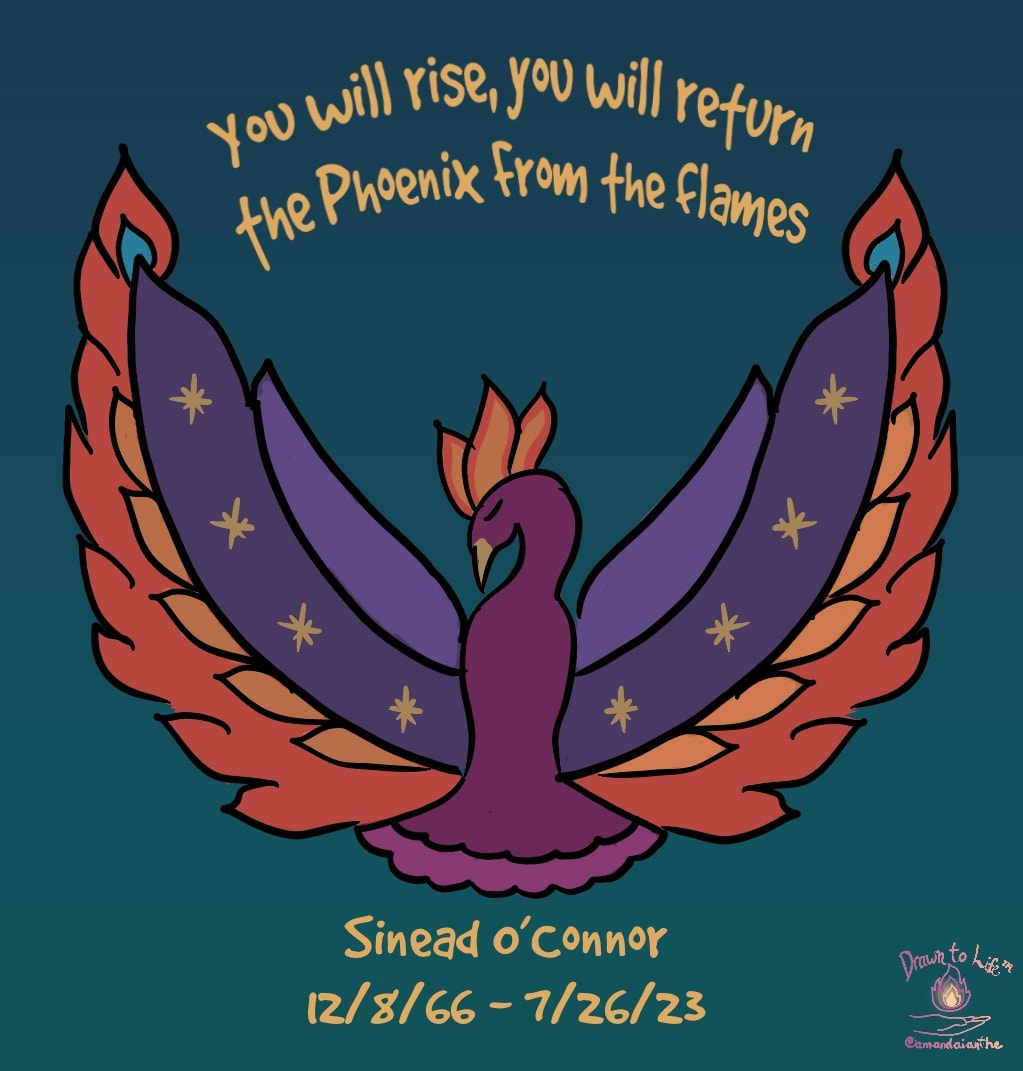 Footnotes: 1. It seems like it's always the mother, more than the father, that gets all the rap, maybe because the mother is typically closest to the child, or maybe because she is held up to higher standards. But why a child grows up the way they do, I have found, is tied just as much to the father, if you look closely. Even in cases where the violence doesn't come directly from the dad, it still has a great impact - remember the quote "the best thing a father can do for his children is to love their mother". Either way, it's undeniable how powerful, and in some strange ways underestimated, the role of mother/woman is in this world.) 2. Celebrities cited as having BPD or BPD-like symptoms include Princess Diana, Vincent Van Gogh, Silvia Plath, Ernest Hemingway, Jim Morrison, Marylin Monroe, Jim Carey, Carrie Fischer, to name a few. PS. It boggles the mind even more remembering it was in her hauntingly beautiful song Feel So Different, that Sinead cites the Twelves Steps prayer: God grant me the Serenity to accept the things I cannot change Courage to change the things I can And the Wisdom to know the difference I am not like I was before I thought that nothing would change me I was not listening anymore Still, you continued to affect me I was not thinking anymore Although I said I still was I'd said, "I don't want anymore" Because of bad experience I have not seen freedom before And I did not expect to Don't let me forget now I'm here Help me to help you to behold you The whole time I'd never seen All you had spread before me The whole time I'd never seen All I needed was inside me And now I feel so different.
0 Comments
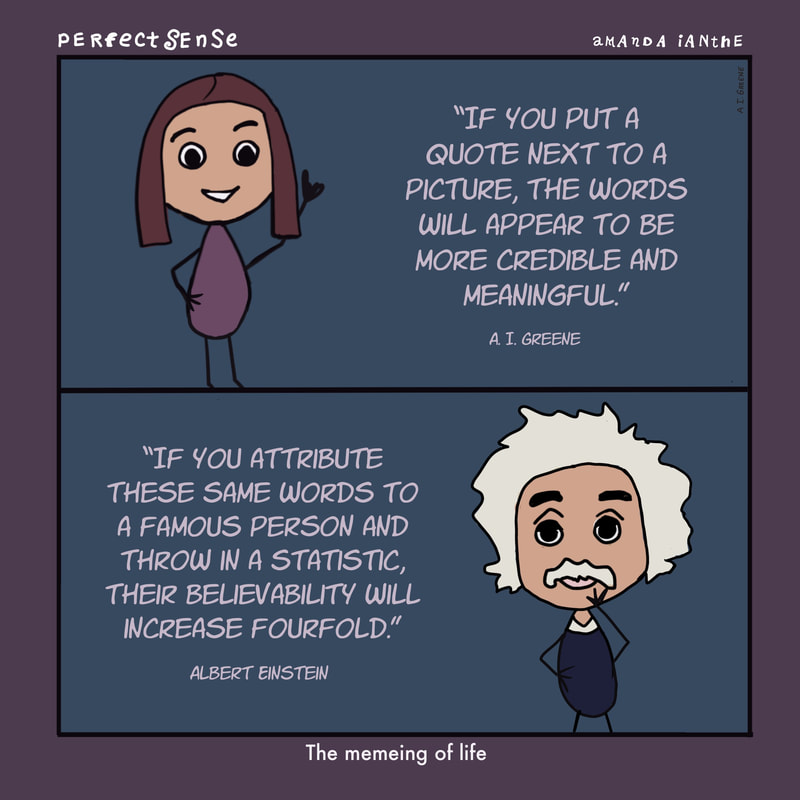
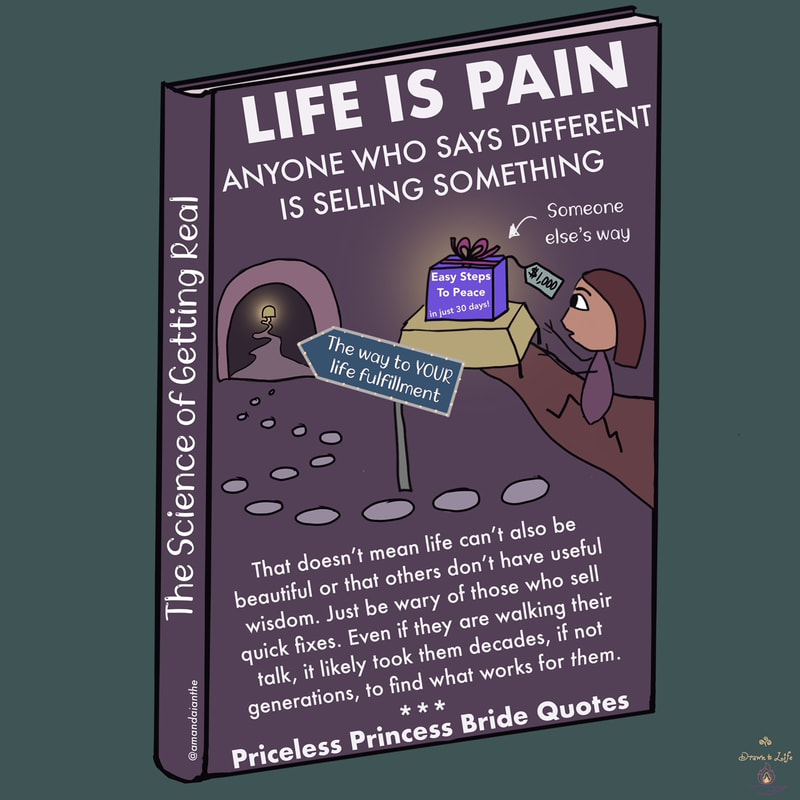
Today's musing is on memes. Not the funny ones that have a cat picture with text that reads "me, when <insert experience that looks funny with cat picture>;" just the simple ones consisting of a quote, sometimes paired with a picture and aimed to share a deep truth or insight. I've been contemplating this online phenomenon for many years with mixed emotions. On the one hand, as an open and impressionable truth seeker, I've been attracted to the ready-served sound-bite wisdom found on social media. If nothing else, they'd wake up my brain to see things in a new way. At the same time, my inner silly philosopher comic couldn't help but parody the prevalence of quotes everywhere. Below are two from 2013 and 2016, which I recently redrew in my new comic style. Needless to say, I had conflicting feelings about memes, struggling to reconcile the two parts of me - one that felt like I was really finding new information in heart felt sharing online, and another that saw, for one, the irony of looking outside myself for answers. So finally, this past month I decided to take a stab at writing down something coherent about memes when, for the umpteenth time, I stumbled on a quote that gave me the knee-jerk response: "this is a perfect example of how a momentary personal truth without context is often just a half-truth, no better and sometimes worse than a lie." It read: Surround yourself with people who talk about their visions, ideas and dreams, not those who talk about other people. You've probably heard some variation of this. The one I was most familiar with was: great mind discuss ideas, good minds discuss events, small minds discuss people. And as an abstract thinker who has spent a lot of time isolated away from human connection, it was easy for me to jump on board. Not only did it sound true, but it meant I fell into the “great” category most of the time. I’ve never been a big talker of people - partly out of a deep respect for privacy, but also due to my natural inclination to focus on ideas and abstractions, quite a novice at intimacy. But recently, as I've been healing some developmental traumas with somatic therapy, I've started admiring those who talk about people because I see in them a prioritization in their hearts towards relationships with others, arguably the most important ingredient for a fulfilling life, and a stark contrast to my own existential pursuit of making sense of things in the abstract with hyper-focus on goals, often at the expense of connection and intimacy. In other words, for someone like me, that quote was potentially bad advice.
Of course this doesn't mean I think gossip-like talking about people is good, which is likely one of the points the quotes above are trying to make. Or that I believe we shouldn't talk about ideas or dreams or surround ourselves with those that do. It's about balance, and depending on which extreme you reside, different kinds of encouragements are required to bring you to equilibrium. You don't give everyone the same medication, why would you give everyone the same advice? So when I stumbled upon the meme above I was actually offended at what a trite and gross oversimplification the post was, as I had recently been learning so much about social intelligence from a friend that talked a lot about people and relationships, something I vitally needed more of in my life. I saw how this meme was a clear demonstration of what so many personal epiphanies and insights become when reduced to a meme or quote floating around social media: without context, they can be quite meaningless, and potentially harmful because we are likely going to just make them mean what we want them to mean, while mistakenly assuming we've found some sort of hard and fast truth. 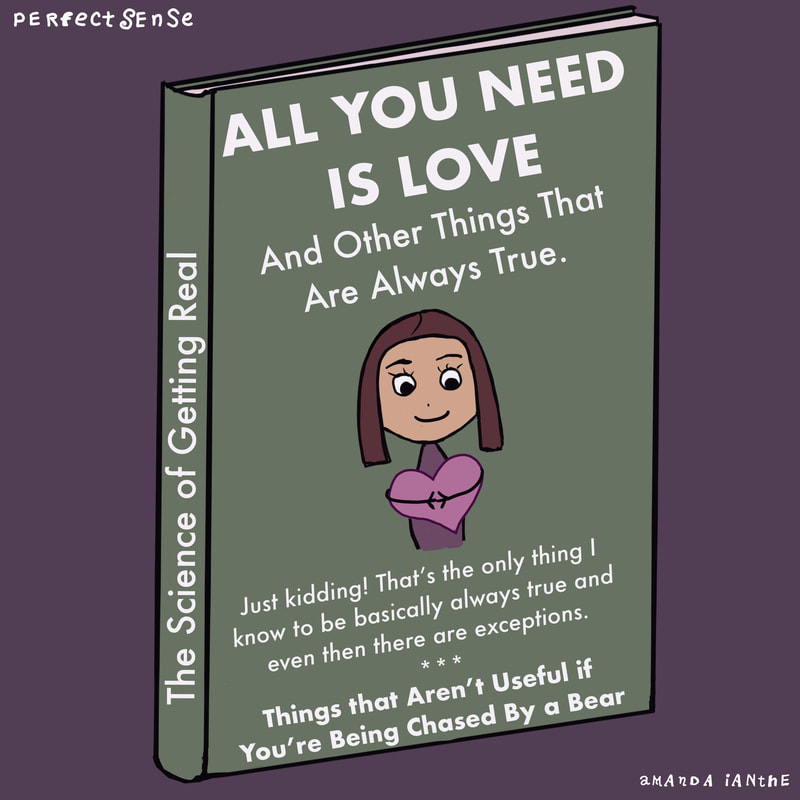 This experience also speaks to a broader issue around social media, specifically how the algorithms, programmed to give you "more of what you want," also result in keeping you in a tunnel vision of thoughts and ideas that reinforce and strengthen your own beliefs, beliefs that might actually benefit from being challenged and shaken up from time to time. Of course, this is an age old phenomenon that's existed long before social media or even the internet. Our tendency to blind ourselves to contradicting evidence, to hang around likeminded folks that support our beliefs, to attract more of what we focus on, is not new. The problem with social media is that it exaggerates this already existing dynamic. It's the law of attraction on steroids with unintended side effects that, without awareness, can polarize people and keep them in delusion. It's not that being attracted to likeminded ideas and people is bad, or that social media, in and of itself, is bad (well, it's a mixed bag given the people behind the companies running it). It's just that when we aren't aware of the larger landscape and machinations at work in the background, we can jump to conclusions that may not be grounded in reality, or in our best interest in terms of growth. Nor do I think enjoying quotes that resonate online is a bad thing - I know I have learned a lot. But it's been at a cost when the motivation behind the searching was an insatiable emptiness; when I would walk away with the impression of just having learned new wisdom, or connected with others, when in reality I just spent hours glued to a curtailed feed aimed to keep me there and make money off my attention. 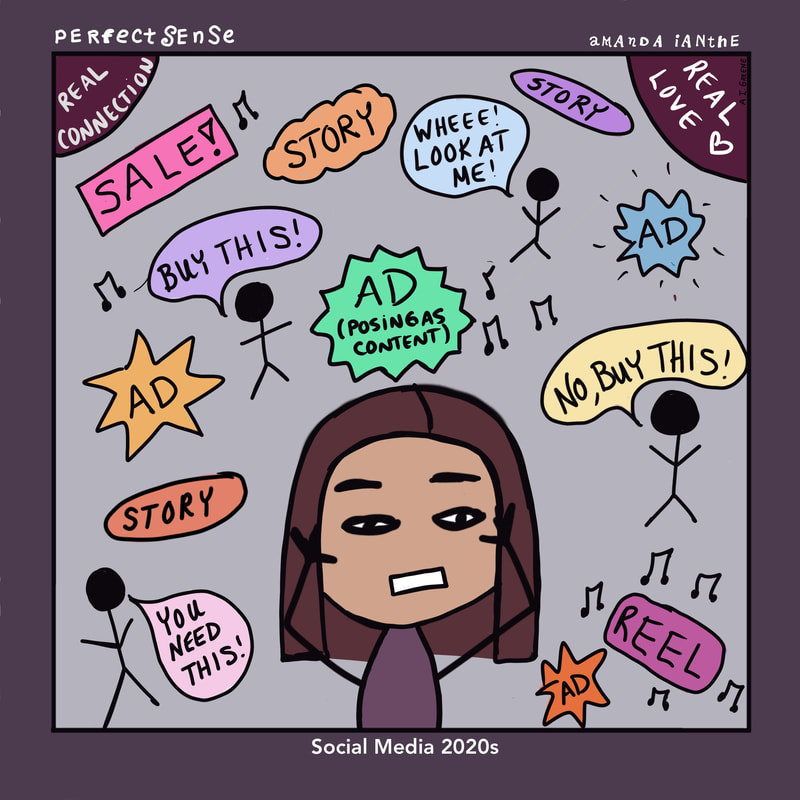 How much more embodied wisdom I might have if I just spend time in stillness, present to my body and that quiet voice of intuition, rather than consuming the truths and thoughts of others. How much more real connection I would have if I let myself open up to people in real life. Again, it's a balance; the actions differ depending on where you are. The take away from this isn't a profound new truth, but a call to re-empower our own inner authority and wisdom, a reminder that every wise sounding quote was simply a truth for a particular person at a particular moment in time in a particular context, and that no matter how much something resonates, it's still just a truth in the moment, not necessarily some objective reality about the world and how it works. Truth is relative and always changing, and giving any one thing too much meaning or importance may be just another distraction away from the truth in THIS totally new moment. Ironically enough, this email is another example of this - it's my truth at this moment in time as I go through a long-needed transition of being more mindful about what's going on in my own body and less outwardly seeking some truth I think will fix me. It's an expression of my own need to spend more time connecting with others, and less in my own mind's worlds of ideas and abstractions. You may be on a different part of the spectrum, so if this doesn't resonate, trust that. Or maybe it will inspire new thoughts for you on the concept of truth, or help to remember that we don't always have to polarize in one direction or another in order to find it. Maybe it's just always here, in this new moment. So here's to a life filled with "ANDs." To conversations about ideas AND people AND events as the situation calls for. Here's to being more present in our bodies to find our own truth, one that's evolving moment by moment. Here's to accessing the present where the truth is always evolving and shifting, moment by moment by moment.
Life is an unfolding, it couldn't have happened any other way It used to be mind-boggling to me that despite all the efforts humans make in their life time, so few ever seem to really change at fundamental levels of habits, such as relationships with food, with other people, with themselves. I remember reading that comic strip Cathy and thinking, "who are these crazy people who keep saying they are going to have more self control and never do?" I remember thinking, "but I’m going to be different. I am going to change." Many years later, and I am blown away by anyone who manages to change even one central habit. As I see it now, you don’t expect a leopard to will itself to become a fox, why would you expect a carefully designed human with processes going on we haven’t yet even begun to understand, to easily change itself, with its own self? Do we ask a red paintbrush to turn itself purple? It would at the very least need something outside itself, a blue paint brush, to do that. But here I’ve been thinking I could just will myself to become an entirely different person than I had developed into, on my own no less, ultimately overestimating the power of the mind and underestimating the power of the body. That "One Thing" That Will Change it All I had an inspiration the other day, a subtle but significant shift in perspective about something I’ve been trying to work through for over thirty years, and I thought to myself, “Oh my gosh. This is it. This is the shift in perspective that’s going to change my life.” And then I thought about all the times I’ve had that same thought - that I'd found the answer - and it didn’t change anything at all. And even if this time it was the thing that changed my life, that doesn’t mean it’s going help anyone else, which is like half the meaning in discovery, right? Being able to help others is what makes it all feel meaningful and worthwhile. But the chances of a personal epiphany impacting someone else in the same profound way it did me are exceedingly small. This is not to say that breakthroughs aren't worth sharing, or to devalue the small but important differences sharing could make for others, or to discourage attempts to change. It’s to say that it’s time to get real about how much goes into the changes that occur in a person's life, and how little we understand them. The stories of zero to hero, from rags to riches, that get exalted in the media, in bestselling books and award-winning movies, make it seem like there’s this “one thing” that can change the trajectory of a person’s life. And we think that it could do the same for us—in a single lifetime no less. But evolution takes time, iterations, trial and error. It’s really only when we look back that we imagine we see the cause and effect on our path; and even then, it’s just one path, one way of unfolding. 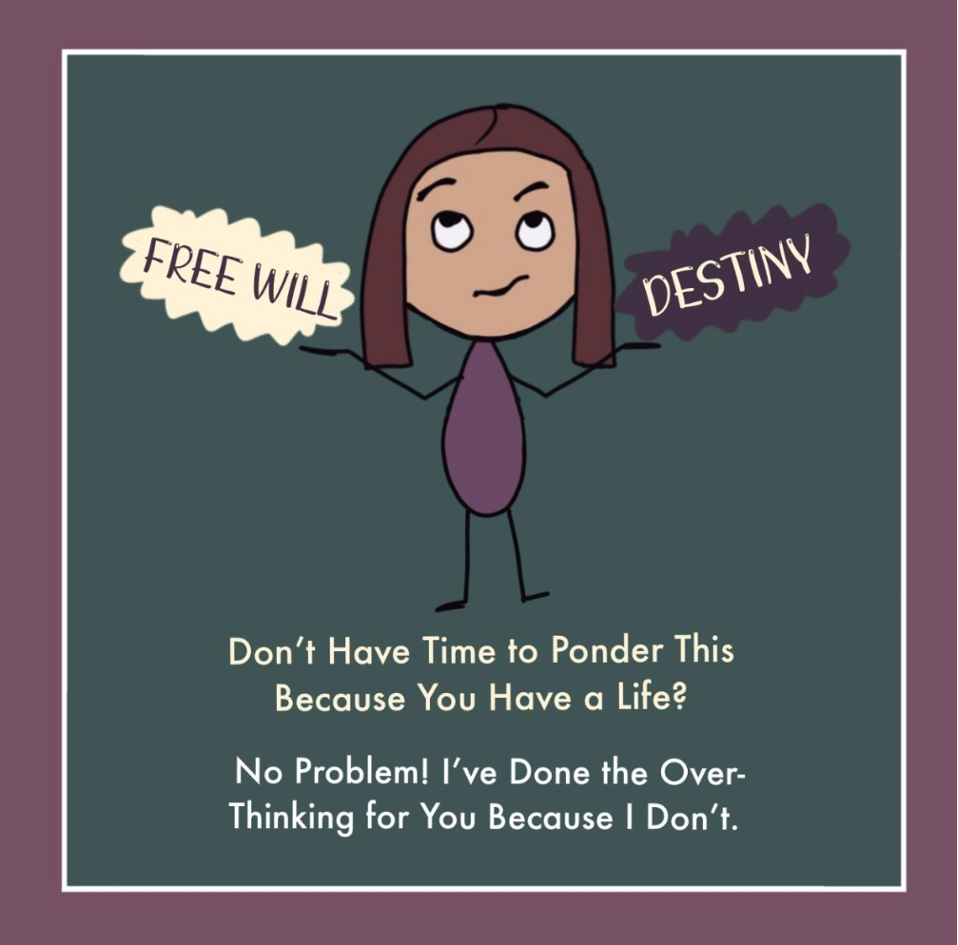 It's So Many Things So many factors influence where, when, and how a life transforms - how a life that feels out of sync or misaligned with one’s nature, one riddled and controlled by conditioning or trauma, can shift to a life of flow and integrity with a deeper empowered truth. Long before we were born, things were set in motion for the life in which we find ourselves now. There’s actual momentum behind the generational patterns that live in the bodies we are born into - showing up in our nervous system development in utero, early childhood experiences, genetics, predispositions, disabilities, class heritages, ancestral traumas. Any one of which can take near-heroic efforts to alter or redirect. Then there are the small decisions we’ve made over decades on our own personal timeline, all influenced by these things already set in motion, reinforcing them. And there’s the environment in which we find ourselves, in this very moment, constantly feeding back to us the decisions made by a past version of ourself, further perpetuating the current state of affairs. There’s the present biological stage we’re in, hormones influencing our brain chemistry that can work for or against us in terms of breaking patterns. There’s timing—which skills or personality types society values and predisposes one to success changes over time. Not to mention the built-in societal structures that further reinforce the status quo. There are so many things at play, most of which we have absolutely no control over, nor an adequate cognitive awareness of to even know how to. I’d be remiss to chalk up one’s lot in life to chance or luck, but it’s absurd to think we are so almighty powerful that we can turn it all around in a single moment, or even a single lifetime, let alone with a single inspiration, book, self-help curriculum, or philosophy. Don't let anyone tell you you're being negative if you say you feel the odds are stacked against you - but also, don't give up, because the odds may be stacked for you in ways you just can't see yet. Where Change Happens (stating the obvious) On the one hand, it is only in the present moment that anything ever happens. The present moment is where our point of power resides, where we may set ourselves in a new direction with new daily actions. It is the only time that our entire experience of the world can change—right now, in this moment. But all the little things that led up to this moment and how they worked together to create our current state of mind (how present our wired-in nervous system allows us to be to even access present-moment awareness and make mindful choices) and our way of interacting with the environment, are far beyond our comprehension. Our personal actions only make up a fraction of time, a few decades out of millennia of evolution and generational patterns. Add into that all the biochemical processes going on that our brain is not conscious of, and you’ll see why I am wary of self-help teachers who proclaim to know “the answer,” something that guarantees to set you free. The perfect combination of conditions that will result in the transformation you so desperately desire, the healing that finally allows you to unabashedly be who you are, cannot be predicted or manufactured in real life with certainty. It may seem like we’re in charge of whether we change; it may seem like we have choices. But what compels us to know when and how to make those choices, or to even know what choices are available to make? It’s all speculation—what causes what. Yet so often, when someone undergoes a transformation that allows them to turn their life around, to be “successful” or true to themselves, they’re inclined to reverse engineer the steps they took to get there and share it with others as if it will work for them too. Their intentions are often genuine, but misled, for they leave out generations of evolution and untold variables that contributed to their own transformative moment. And that’s a problem. 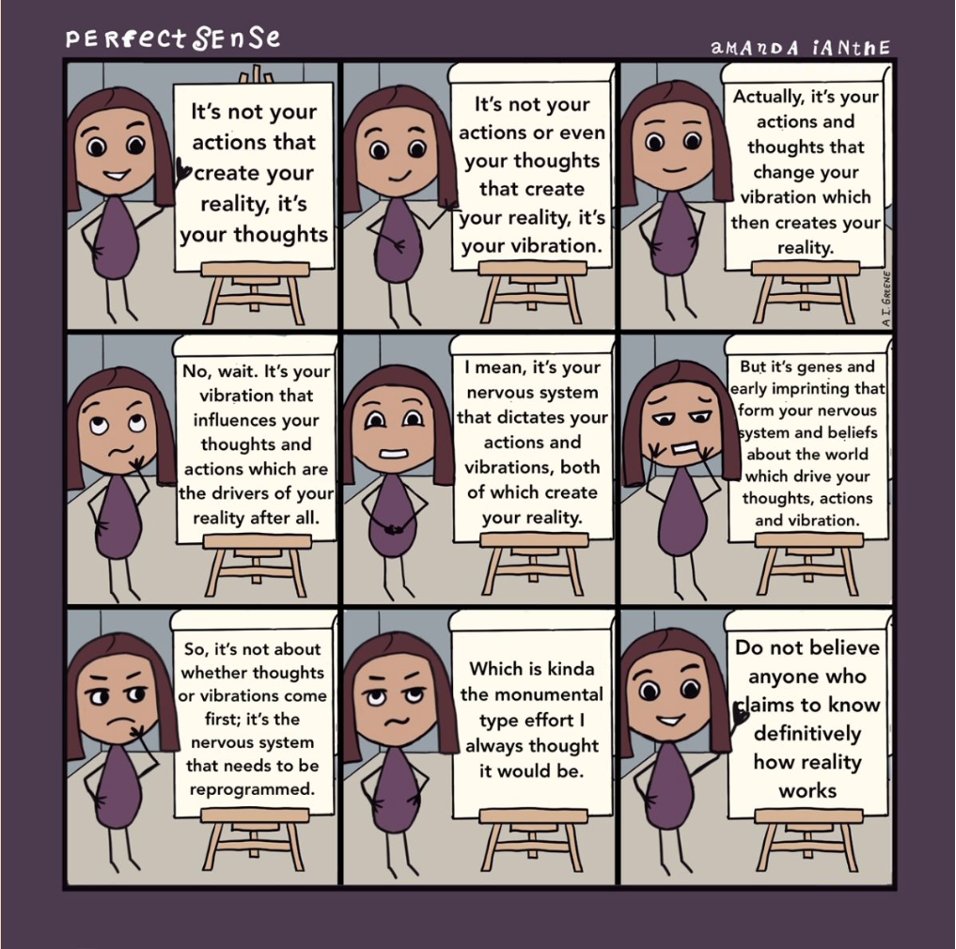 Self-Help Over SimplifiesThis is my core issue with the coaching and self-help industry. It’s more complicated than many of the authors make it sound, leading the consumers to feel like failures when their attempts to model after their advice fail. Theoretically, anything is possible – sure, a life can shift toward a new trajectory in a single moment, but when and how that moment happens is simply unknowable. How can the brain predict itself when it is part of the very nature it’s trying to predict, and when nature is constantly unfolding? No, it isn't all anarchy. And this doesn’t mean we don’t have an impact on our lives and environments with our moods and actions moment by moment. But what determines what mood we’re in? They’ll tell you it’s your thoughts, but I’m here to tell you it’s not. It’s more than that. It’s what you ate yesterday, who you talked to last week, the state of your nervous system, your age, your wiring, your genes, your ancestors—the unprocessed trauma fighting to break free and emerging whenever it pleases. It doesn’t mean that our focus doesn’t influence our path in life. You spend 10,000 hours practicing a skill, you are bound to master it. But what determines what we wind up focusing on? How much meditation is required to go from confusion to the clarity and presence of mind to make good decisions at particular moments in time that set us on that new path that breaks generations of self-defeating patterns that in themselves are part of the evolution? I believe these things are unknowable, different for everyone, and mostly out of our control. 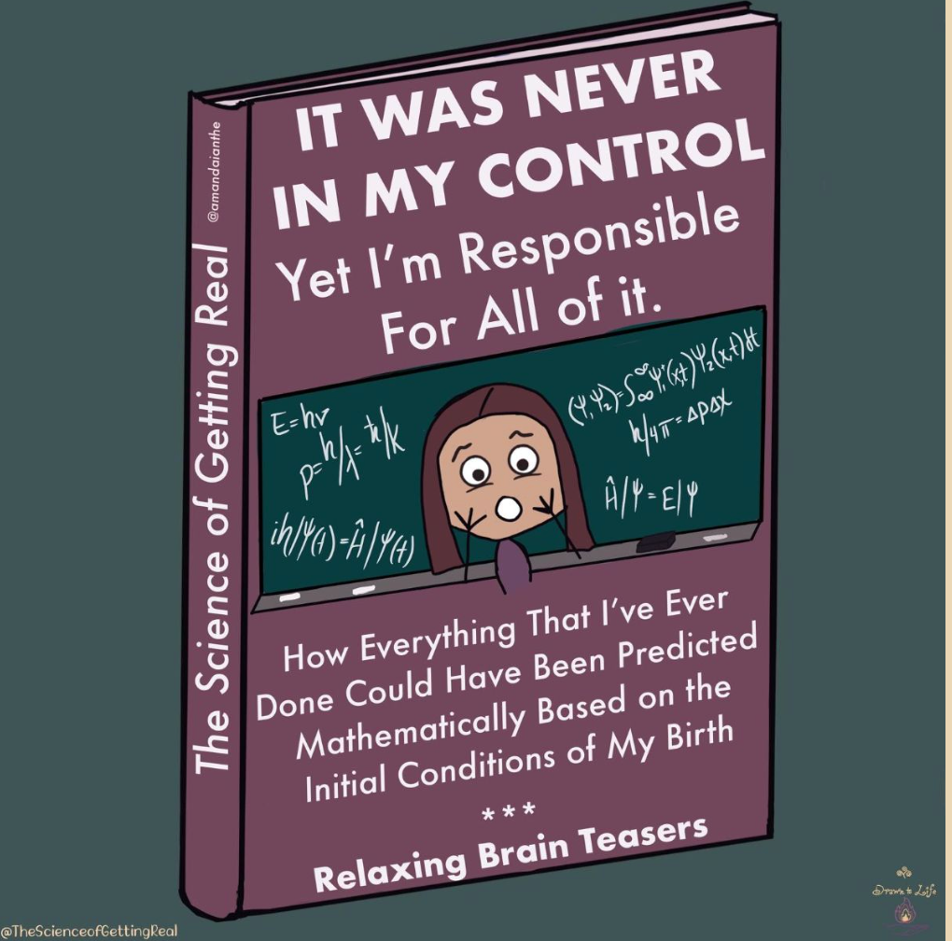 What Do I Do With This Information?Now you may be asking: how is it helpful to acknowledge how little control we have over our lives, despite being responsible for each moment? More knowledge is not what we want. We want more peace, more love, more power over our lives, not less. Well, if you had said this to me when I was in my twenties – that the chances are next to nil that I will break free from my negative ancestral patterns by the time I was thirty-five, I would have gone ballistic. Not because life would be meaningless if everything were preordained, but because my life would be too painful if I was destined to follow any more in my tragic ancestors’ footsteps. But over a decade later, this new perspective of things not all being in my control is now the thing that keeps me wanting to live. I no longer believe a simple set of decisions could have changed it all around. That’s like tracing back the way a flower bloomed and whether it became a rose or an iris to some simple set of instructions you could change with the attention of the conscious mind! No, it was my entire way of being that got me here. And my entire way of being is far more nuanced and complex than a set of instructions in a book, or decisions my conscious brain can manufacture, let alone a set of positive thoughts.. 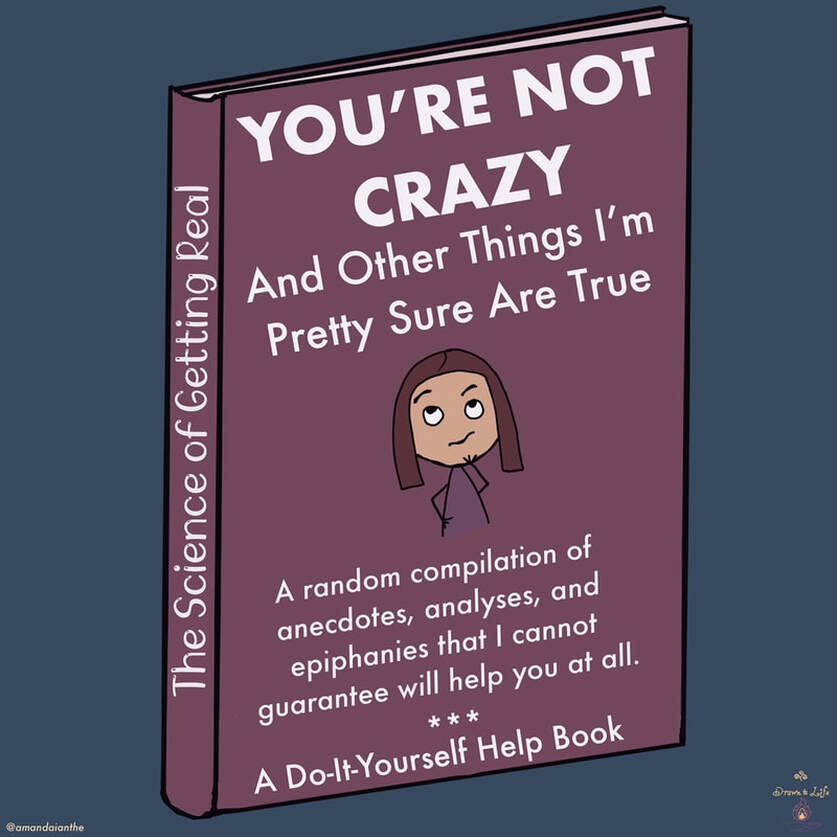 A Cryptic Conclusion When I woke up one day to see I was living so many aspects of life I had so desperately feared, it hurt just as badly as I had imagined it would. But I made it through to the other side which is where the freedom resides. What if my fears hadn’t been irrational? What if my fears didn’t lead to a self-fulfilling prophecy like people who preach law of attraction stuff would lead you to believe, but rather were my gut instinct, knowing I’d experienced such severe trauma in my early childhood that destined me to walk a grueling path before I developed the nervous system capacity to slow down enough to figure out what's really right for me? While I may have felt empowered in my twenties thinking I had absolute control over the ultimate direction of my life, perhaps the naive approach I took then was so delusional that it thwarted my ability to access my inner power? And perhaps that initial delusional approach was also an essential part of the path for it gave me hope, albeit a false one. There’s just so much that we cannot see or even grasp. When you think of all the processes going on in our bodies, so many that our conscious minds aren't controlling, it starts to make sense when people talk about the wisdom in our bodies being so much greater than our minds. It’s why we have to take ourselves off the hook for how far we’ve gotten in our own personal growth journey. Sheer acts of will and positive thinking only go so far. It’s also why meditation, breathing, and somatic experiencing are such powerful healing tools. It points to the deep need for us as a species to learn how to move out of our thinking minds—the parts of us that search for answers to why, that judge ourselves and second guess our decisions, and try to reverse engineer formulas for change—and into our bodies. But even then, depending on the type of trauma and nervous system a person has, breath work or meditation could be dangerous, especially not in the presence of a loving other. I would like to leave on a more conclusive note, summarizing the whole spiel into a neatly articulated point, but I am not quite there yet. But I'll leave you with this. It's only when I remember that I am mostly powerless over my fate —that I don’t have the omnipotent control I imagined I had in my younger years-- that I actually arrive at reality, and, ironically, I find my real power Check out this Malcom Gladwell talk on his book Outliers for a more academic explanation about the degree to which the conditions of our birth impact our life. Life is an unfolding that couldn’t have happened |
Author:Amanda I. Greene This is where I share thoughtful, and sometimes unpolished, musings in the form of philosophical explorations, inspirations, poems, and artwork.
Archives
November 2025
Categories
All
|

 RSS Feed
Site powered by Weebly. Managed by Bluehost